| dbp:event
|
- 0001-09-24 (xsd:gMonthDay)
- -1990.0 (dbd:second)
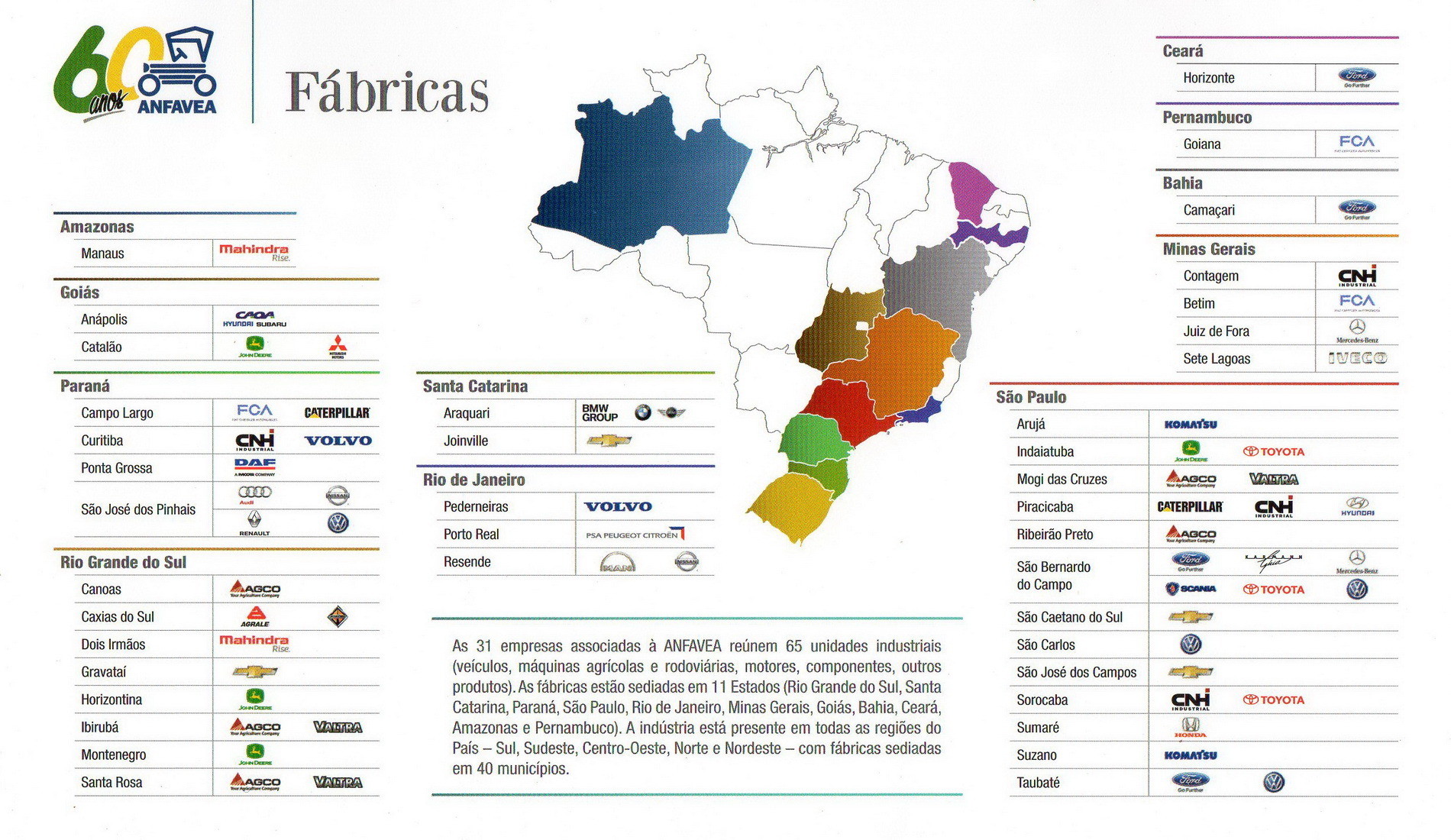
- Volkswagen and Audi opened factories in São José dos Pinhais, Paraná; Mercedes-Benz opened a factory in Juiz de Fora, Minas Gerais; Fiat Industrial acquired the CNH Global, creating the CNH Industrial; Caoa began representing Hyundai. (en)
- General Motors opened a manufacturing plant in Gravataí; Iveco inaugurated a factory in Minas Gerais. (en)
- DAF Caminhões inaugurated a manufacturing plant in Ponta Grossa, Paraná; CNH Industrial was created after a merger between Fiat Industrial and CNH Global; BMW opened a manufacturing plant in Araquari, Santa Catarina; Nissan opened a factory in Resende; Agrale inaugurated chassis manufacturing plant in São Mateus, São Paulo. FCA inaugurated Jeep assembly plant in Goiana, Pernambuco. (en)
- Volkswagen began producing trucks in Resende, Rio de Janeiro. Agrale began manufacturing trucks and motorcycles. (en)
- Volkswagen purchased Vemag; Tratores Fiat was founded, Alfa Romeo acquired FNM and Puma began selling sports cars. Chrysler started the production in Brazil; Gurgel Motores was founded. (en)
- Dumont founded the Automóvel Clube do Brasil and fought for safety regulations. President Affonso Pena was the first Brazilian President to be transported in a motor vehicle, from Charron, Girardot et Voigt. (en)
- International Harvester do Brasil, a truck manufacturer, was founded. It was the first automaker in the commercial vehicle segment to establish itself in the country. (en)
- First Ford sold in the country was the Model A, imported by Ford representative William T. Right. (en)
- Willys inaugurated its Jaboatão dos Guararapes plant in Pernambuco, the first manufacturing plant in the Northeast Region; Chrysler was established after Simca's purchase. (en)
- Honda opened a manufacturing plant in Itirapina, São Paulo; Toyota introduced the Corolla, the world's first hybrid flex-fuel vehicle; Between 1957 and 2019 more than 84.4 million motor vehicles and 2.77 million trucks were produced in Brazil. (en)
- Caoa opened factory in Anápolis; Domestic production grew 14% compared to 2006 figures, reaching more than 4 million vehicles. (en)
- The Interlagos Circuit was inaugurated. The first trip from São Paulo to Fortaleza by car was completed in a Chevrolet in 25 days. (en)
- The first Brazilian commercial vehicles were exported, the Mercedes-Benz O-321 was exported to Argentina and Venezuela; Massey Ferguson inaugurated a tractor plant. (en)
- The first Brazilian automotive exhibition, a predecessor of the São Paulo International Motor Show, was held by Ford, at the Palace of Industry in São Paulo, near Tamanduateí River; At least 30,000 vehicles were already circulating through the country's streets. (en)
- 2984400.0 (dbd:second)
- Anfavea inaugurated the Documentation Center for Brazilian Automotive Industry ; The 1st Agriculture Fair was held in Ribeirão Preto; Hyundai designated a representative to Brazil. (en)
- The Subcommittee for Jeeps, Tractors, Trucks, and Automobiles was established for the purpose of facilitating investments in the automotive industry. Willys Overland was founded. (en)
- Arrival of Toyota, in one of the most important chapters in the history of the manufacturer, the company installed the brand's first operation outside Japan; Willys and Ford opened their first casting plants. Scania began producing trucks; General Motors inaugurated another manufacturing plant in São Caetano do Sul. (en)
- The Peugeot Type 3, the very first vehicle in Brazil, was bought by Alberto Santos Dumont, after a trip to France. Dumont would later found the Automóvel Clube do Brasil . (en)
- The first wave of affordable vehicles, with lower price and taxes was released by DKW-Vemag, Willys and Volkswagen models; Agrisa was acquired and renamed to Agrale; The São Paulo Vehicle Dealers' Association came to be national in scope, becoming the Brazilian Association for Authorized Vehicle Resale afterwards known as Fenabrave. (en)
- For the first time flex-fuel vehicles sold more than gasoline vehicles, with a total of 753,000 units against 647,000 units, respectively; Audi took control over the importation operations. (en)
- Great Wall Motors bought the Mercedes-Benz factory in Iracemápolis; Ford Brazil and Troller were closed by Ford; Creation of the Stellantis Group, merger of PSA and FCA. (en)
- Caterpillar established in Santo Amaro, São Paulo, with a warehouse for marketing, manufacturing and stocking components and parts. (en)
- Studebaker Automobile Distributor founded, which gave rise to Vemag. (en)
- Massey-Harris opened a branch in Porto Alegre. Its agricultural machinery carried out the first mechanized rice harvest in Brazil; The São Paulo-Santos highway was named Via Anchieta. (en)
- The Brazilian Ford branch moves into its own building in the Bom Retiro neighborhood, opening its own production facility, known as Solon Plant. The São Paulo-Campinas highway was inaugurated by Washington Luís, the first highway built specifically for car and truck traffic. (en)
- General Motors opened its first branch, in Ipiranga, São Paulo. (en)
- Scania and Toyota inaugurated their factories, in São Bernardo do Campo; The Agrisa, Industria Gaúcha de Implementos Agrícolas, was formed. (en)
- With the end of Fordlândia, Ford exchanged part of the land for another area, called Belterra where 3.2 million rubber trees were planted, followed by US$8 million in investments; GM produced the first bus body made in Brazil, made of wood. (en)
- Volkswagen launched the first vehicle with electronic fuel injection, at the local market, the Gol GTi. (en)
- CNH Industrial opened factory in Sorocaba, São Paulo; Caterpillar inaugurated a plant in Campo Largo, Paraná; The Brazilian automotive industry reached the mark of 10 million flex-fuel vehicles produced; DAF Trucks was established in Brazil. (en)
- Major Industries like GM, BYD, Stellantis, VW etc. are Investing huge money value in upgrading engines of flexible hybrid technology and models as well as the factories in territory. (en)
- FNM signed an agreement to produce trucks with Alfa Romeo. (en)
- Ford opened a factory in Camaçari, Bahia; PSA Group opened Peugeot Citroën plant in Porto Real, Rio de Janeiro; Nissan began production in Brazil at the Renault factory in São José dos Pinhais. (en)
- Vehicle production drops to 1957 levels due to the COVID-19 pandemic. (en)
- Nissan began activities with the importation of some models; Audi designated a representative to import its vehicles; The 2nd Automotive Sectoral Agreement was created; The "Carro Popular" program was started. (en)
- The Autoesporte, one of the most important car magazines in Brazil, was released. (en)
- Anfavea opened its headquarters in São Paulo. Komatsu established itself with a tractor manufacturing plant, in Suzano, São Paulo. New Holland opened a plant in Curitiba, Paraná. The National Alcohol Program was created, the main objective of the program was to become less dependent on petroleum. (en)
- Volkswagen do Brasil was founded and assembly began in the Ipiranga neighborhood; Mercedes-Benz was founded in Via Anchieta; The importation of completely built units became prohibited, to protect the local market; Petrobras, main local fuel supplier and producer was founded and implemented, during Juscelino Kubitschek President Campaign; Ford inaugurated a manufacturing plant in Ipiranga. (en)
- Volkswagen officially opens its São Bernardo do Campo plant; Scania opens a factory in Ipiranga; Karmann-Ghia was founded; The National Plan for the Agricultural Tractor Industry was created to stimulate the production of agricultural vehicles. At the same time, a Brazilian entrepreneur started producing an electrical small jeep called Tupi. (en)
- General Motors opened a manufacturing plant in Joinville, Santa Catarina; Hyundai inaugurated a manufacturing plant in Piracicaba; Toyota opened a factory in Sorocaba; On October, the Inovar-Auto program was approved by decree with the theoretical goals of encouraging automakers to produce more fuel efficient vehicles and investing in the national automotive industry, by managing taxation exceptions . However, the program has received criticism, especially of protectionism; Recently, Brazil lost a WTO dispute against tax advantages and illegal practices of protectionism. (en)
- The Associação da Indústria de Peças para Automóveis e Similares was founded, the embryo of the Sindicato Nacional de Componentes para Veículos Automotores . (en)
- ANFAVEA launches the first edition of its statistical yearbook; Valmet do Brasil is founded with the inauguration of a tractor factory in Mogi das Cruzes, São Paulo; The Companhia Brasileira de Tratores was established; Ford starts producing tractors at the Ipiranga plant; The Quatro Rodas magazine was launched, it has since established itself as the most important reference for the Brazilian automotive industry; The 1st São Paulo International Motor Show was held in Ibirapuera Park, São Paulo. (en)
- Volkswagen opened its biggest plant in country in São Bernardo do Campo-SP; Ford nationalized truck manufacturing; Simca was founded. (en)
- The 7th annual São Paulo International Motor Show was held at the Anhembi Convention Center, in São Paulo. (en)
- The Associação Profissional dos Fabricantes de Tratores, Caminhões, Automóveis e Veículos Similares was founded; First engine block cast in Brazil and Latin America, ordered by Mercedes-Benz. (en)
- The Brazilian automotive industry reached the historic mark of a million units manufactured in a single year. Labor movements were responsible for the first strikes in the metal works industry in São Paulo. (en)
- The Ford Model A, successor to the Model T, arrives in Brazil. Henry Ford created Fordlândia, a typical American village with in the middle of the Amazon rainforest in Pará. (en)
- ANFAVEA celebrates 50 years; Caoa opened a factory in Anápolis; Domestic production grew 14% compared to 2006 figures, reaching more than 4 million vehicles; Fiat and Chrysler signed a global agreement creating the FCA. (en)
- Volvo opened a plant in Curitiba and began manufacturing trucks. Volkswagen purchased Chrysler. (en)
- Renault opened a plant in São José dos Pinhais, Paraná; Mitsubishi inaugurates a manufacturing plant in Catalão, Goiás; Toyota opened a plant in Sumaré and introduced the locally-manufactured Corolla; Chrysler inaugurated a factory plant in Campo Largo, Paraná; Land Rover signed an agreement with Karmann-Ghia and to begin operating in São Bernardo do Campo; Caoa took over the representation of Subaru. (en)
- Ford and Volkswagen merged to create the Autolatina; Anfavea opened an office in Brasília. (en)
- Ford purchased New Holland. Proconve, the Automotive Vehicle Air Pollution Control Program was created. (en)
- Honda opened a factory in Sumaré and introduced the local-made Civic; Case Tractors inaugurated a manufacturing plant in Piracicaba; Peugeot Citroën do Brasil was formed; Komatsu inaugurated its second plant, in Arujá, São Paulo. (en)
- Volvo began producing buses and engines. Caoa, a Ford distributor, was founded. Mercedes-Benz opened a bus manufacturing plant in Campinas. The "Lei Ferrari" , which regulates vehicle commercial concession and distribution, came into effect. The law establishes equality in sale price of vehicles and parts to dealers. In 2012, government representatives highlighted that the so-called "Ferrari Law", was one of the main obstacles to reducing car prices and prevents increased competition in the automotive market. (en)
- General Motors produced the first all-metal bus body with domestic raw material from CSN. (en)
- The General Motors and Ford plants, as well as those of other manufacturers, were submitted to the military command and started to assemble war vehicles with some companies producing components by their headquarters and supplied to Brazil under loan. Foundation of the Companhia Siderúrgica Nacional , in Volta Redonda, Rio de Janeiro, foundry and iron works serving local steel to own country industry, not depending in imported goods, suffered by WWII; The Fábrica Nacional de Motores is, officially, the first Brazilian company in the automotive sector. Created by Getúlio Vargas, the state-owned company had its headquarters in Xerém, Duque de Caxias, operations began only a few years later, due to the difficulties caused by the Second World War. (en)
- Ford unveiled the EcoSport, introducing the compact SUV market segment in Brazil; AGCO purchased Valtr, formerly Valmet. (en)
- Olavo Bilac was responsible for the first registered accident in Rio de Janeiro, the then federal capital had around 30 vehicles in circulation. Bilac crashed his friend's Serpollet in a tree and fell downhill, near the Tijuca road. Shortly after, a Mercedes-Benz collided with a horse-drawn vehicle, at the Botafogo beach. (en)
- Fiat established its first factory, in Betim, Minas Gerais. Fiat acquired the remaining shares of Alfa Romeo and unveiled new trucks, manufactured in the old FNM branches in Xerém. Caterpillar inaugurated plant in Piracicaba, São Paulo. Volkswagen opened a manufacturing plant in Taubaté. A Ford tractor factory was inaugurated. (en)
- Honda began further automotive activity in Brazil, importing vehicles and aggregating the motorcycles production in its factory, in Manaus, Amazonas; Peugeot became associated with a importation representative; Renault designated a representative and began importing some models; The 1st Automotive Sectoral Agreement was created. (en)
- Great Wall Motor officially opened the factory in January 2022, promoting electric SUVs and pickup trucks, production schedule to start in 2023; Toyota announces the transfer of its industrial operation from São Bernardo do Campo to Indaiatuba and Porto Feliz, with completion scheduled for November 2023. The company said that 100% of its 550 employees will keep their jobs, the plant produces parts for Brazil, Argentina and the United States. The São Bernardo do Campo plant was opened in 1962. (en)
- Mitsubishi began operations, designating a representative that began importing pickup trucks. Land Rover began operating with imported vehicles.Citroën provided accreditation to an importer. (en)
- The Executive Group of the Automobile Industry, or GEIA, which created the legislation that allowed the automotive industrialization in Brazil, was established; Inauguration of the Mercedes-Benz plant in São Bernardo do Campo; Romi Industries launches the Romi-Isetta; The National Association of Motor Vehicle Manufacturers, was founded. (en)
- Jaguar Land Rover opened a manufacturing plant in Itatiaia, Rio de Janeiro; Mercedes-Benz opened a plant in Campinas and Iracemápolis; The annual São Paulo International Motor Show took place at the São Paulo Expo for the first time; ANFAVEA elected to participate in the board of the International Organization of Vehicle Manufacturers, the OICA; Toyota inaugurated an engine manufacturing plant in Porto Feliz, São Paulo; The 21st edition of Fenatran was held at the São Paulo Expo; Caoa Group and Chery signed an agreement forming Caoa Chery; Decree of the Route 2030 Program signed with the then-president Michel Temer. (en)
- The Ford 'Engine and Foundry Factory' was inaugurated, Ford's President, Joseph W. O'Neill, announced more than US$400 million in investments for the expansion of the company's activities in Brazil. (en)
- The Brazilian automotive sector plans the car of the future hybrid ethanol, because the local production of the biofuel is wide and accessible, being a clean energy. More than 92% of the cars in Brazil are moved by ethanol. (en)
- AGCO acquired Iochpe-Maxion and Massey Ferguson in Brazil; Volkswagen inaugurated an engine manufacturing plant in São Carlos, São Paulo. Volkswagen Caminhões e Ônibus opened another factory in Resende, producing the local engineered Constellation truck segment; (en)
- First registered automobile, which belonged to Francisco Matarazzo, registered in São Paulo, with the first license plate, P-1. (en)
- Creation of the 3rd Automotive Sector Agreement; BMW took over the operation of imported vehicles, as BMW do Brasil. (en)
|
.jpg?width=300)




/i.s3.glbimg.com/v1/AUTH_cf9d035bf26b4646b105bd958f32089d/internal_photos/bs/2020/F/r/ZJcOslS8ymzRQzttVPMQ/2020-03-27-mapa-fabrica-fechadas-final-copy-1.jpg)
.jpg)


_-_Goiana,_Pernambuco,_Brasil.jpg)


.jpg)
.jpg)

.jpg)


.jpg)


.jpg)
/i.s3.glbimg.com/v1/AUTH_cf9d035bf26b4646b105bd958f32089d/internal_photos/bs/2020/F/r/ZJcOslS8ymzRQzttVPMQ/2020-03-27-mapa-fabrica-fechadas-final-copy-1.jpg)